Skip to content

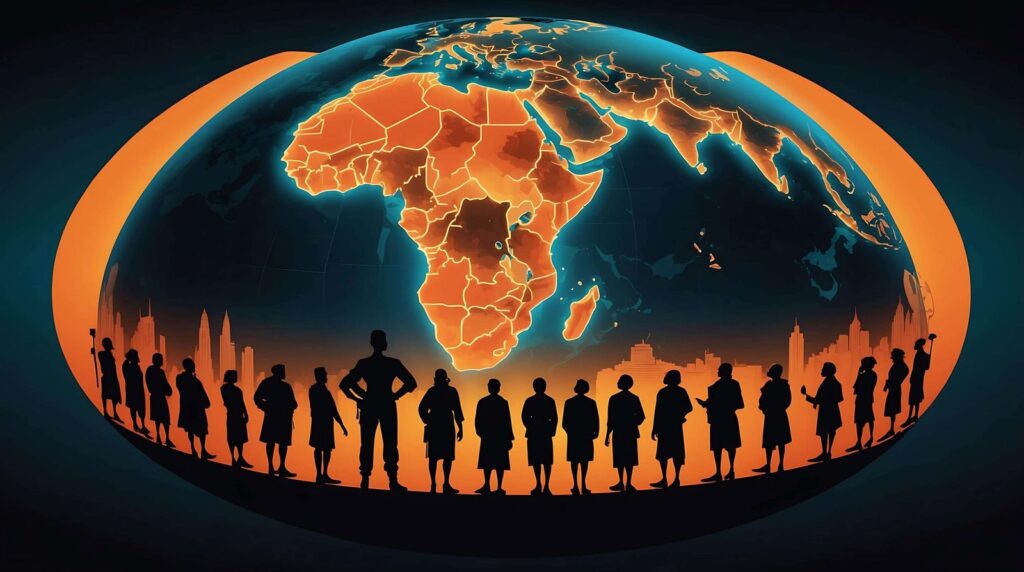
Whether it’s Europe, Asia, or Africa, expanding your business is never an easy task! There is always the challenge of how to take a product that works perfectly in one language and make it resonate in ten others without breaking your budget or your timeline.
Regardless of how you start your research for an answer to that question, all roads will always lead to the same answer: an air-tight plan of translation project management. Without it, you will jeopardize your business, getting “lost in translation.”!
Translation project management done right is basically the difference between a smooth global rollout and a logistical nightmare. So, how can translation project management be the make-or-break for your business expansion? Let’s dive in.
What is Translation Project Management?
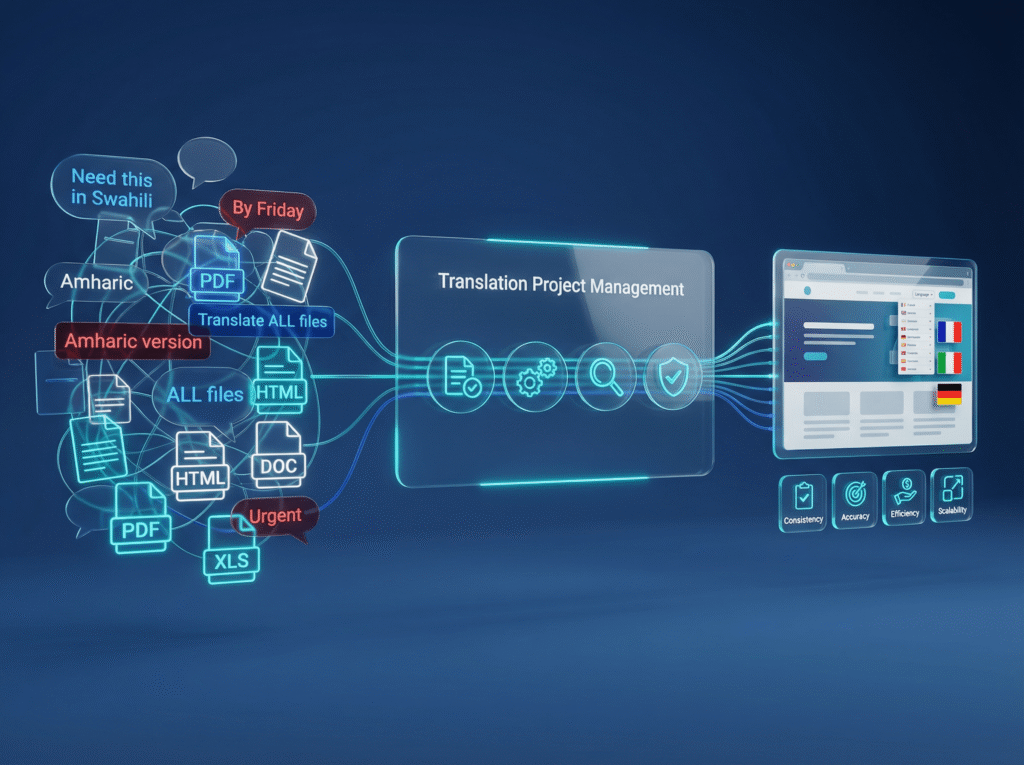
At its core, translation project management is the systematic planning, executing, monitoring, and controlling of language translation projects. It transforms a chaotic request—”we need this website in Swahili, Spanish, and French by Friday”—into a structured deliverable.
Unlike general project management, translation project management requires a specialized understanding of linguistic workflows, cultural adaptation, and localization technologies.
While a translator focuses on the linguistic accuracy of a sentence, a project manager (PM) focuses on the integrity of the entire ecosystem.
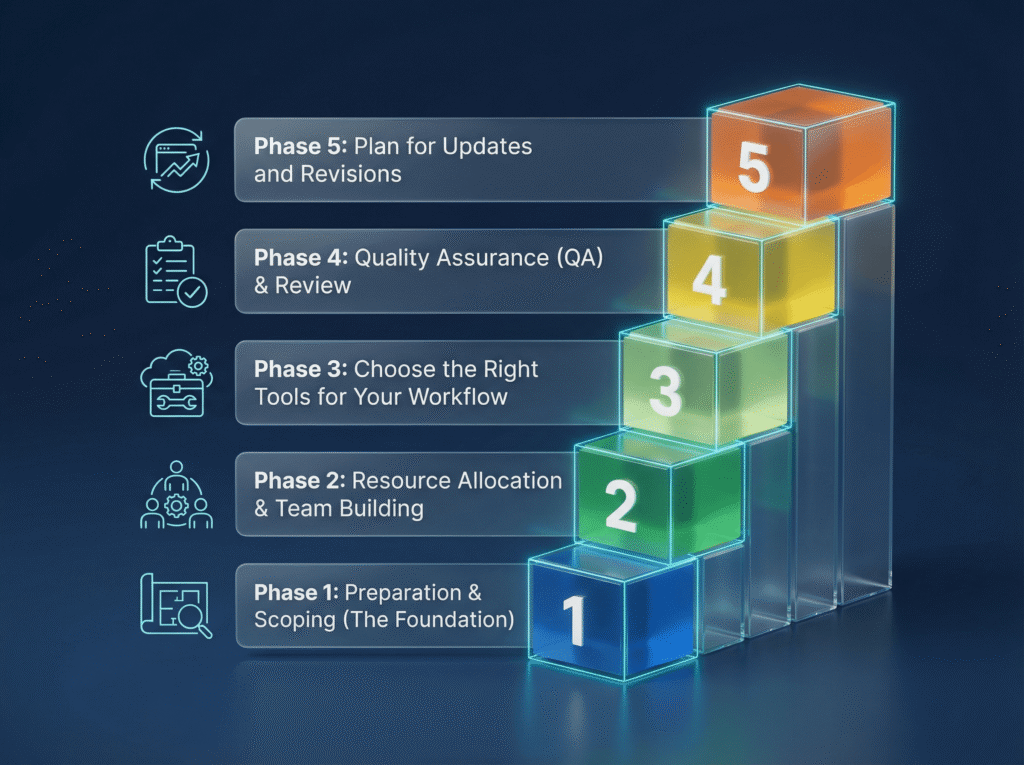
Phase 1: Preparation & Scoping (The Foundation)
You need crystal-clear answers before anything else moves forward.
What are you translating? Get specific about content types: marketing brochures, technical manuals, website copy, and legal documents. Each one requires different expertise and quality thresholds.
Who’s reading this? Your target audience changes everything. Are they tech professionals who expect precise terminology? General consumers who need approachable language? Understanding this drives your translator selection and style choices.
What’s your timeline? Be realistic! Break down your project into phases: preparation, translation, review and editing, quality assurance, and client review. Build in buffer time…..rushing never helps.
What’s your budget? Translation costs go beyond per-word rates. Factor in technology licensing, project management overhead (typically 10-20%), layout adjustments for text expansion, and quality assurance testing.
Pro tip: Document everything upfront; deliverables, formats, deadlines, and approval workflows. This will help you avoid any costly misunderstandings down the line.
Phase 2: Resource Allocation & Team Building
With a clear plan, the next step is to assemble the A-team. You need more than just translators. Depending on your project scale, you might need project managers, editors, proofreaders, and subject-matter experts.
Choose translators wisely; Look for native speakers with relevant industry experience. A translator who’s worked on medical device documentation understands regulatory requirements. A marketing specialist knows how to maintain brand voice across cultures.
Finally, assign clear roles! Who’s translating? Who’s reviewing? Who gives final approval? Define responsibilities upfront and stick to them.
Phase 3: Choose the Right Tools for Your Workflow
This is where the core work happens; you need to choose the right technology that transforms chaos into smooth operations. At a minimum, you need:
Translation Management System (TMS): Your control center that automates workflow routing, tracks progress, manages versions, and centralizes communication. No more scattered files and endless email threads.
Translation Memory (TM): This database stores all your past translations. When similar content appears, it suggests previous translations automatically. The more you use it, the more efficient it gets—reducing costs by 40-70% on repeated content.
Terminology Management: Centralized glossaries ensure consistent translations of company-specific terms. When your translator encounters “API gateway” or “customer success,” they see pre-approved translations instantly.
Quality Assurance Tools: Automated checks catch errors before human reviewers see content, like missing translations, terminology inconsistencies, and formatting problems.
Phase 4: Quality Assurance (QA) & Review
Quality is not an accident; it’s the result of a rigorous process. You need multiple review stages to catch what individual translators might have missed.
Multi-stage reviews work best: Independent editing where different linguists review translations with separate focus areas, linguistic accuracy, stylistic consistency, and technical correctness. Fresh eyes catch errors the original translator might have overlooked.
In-context review is crucial: Review translations in their final environment, website, app interface, and printed document. This will help you discover issues that might be invisible in translation tools, like formatting problems, truncated text, or layout issues.
Set up approval checkpoints: Get stakeholder buy-in during early drafts, not at the final version. This prevents last-minute rewrites that blow your timeline.
Phase 5: Plan for Updates and Revisions
Content changes, product updates roll out, marketing campaigns evolve, and each one of these changes ripples across multiple languages.
Smart teams plan for this from the start. Set up processes for handling updates efficiently; identify what’s changed, translate only new segments, and maintain version control. Your Translation Memory helps here by automatically matching unchanged content.
Also, build revision cycles into your timeline. Allocate buffer time for feedback incorporation. The goal is managing change smoothly, not scrambling when it happens.
TMS vs Agency: Which Route Should You Take?
Here’s the million-dollar question: Should you invest in translation management software and run things yourself, or hire a translation company to handle everything?
A Translation Management System (TMS) is a software platform designed to automate and streamline the localization workflow. It centralizes linguistic assets, manages translators, and tracks project progress. However, a tool is only as good as the expert who manages it!
Here’s a breakdown to help you decide:
| Factor | In-House Management with a TMS | Partnering with a Specialized Agency |
| Expertise | Requires hiring or training a dedicated project manager with deep localization knowledge. | Instant access to a team of experienced project managers, linguists, and engineers. |
| Vendor Management | You are responsible for sourcing, vetting, and managing a global network of freelance translators. | The agency manages its pre-vetted, global network of specialized linguists for you. |
| Scalability | Scaling to new languages or higher volumes can be slow and requires significant internal resources. | Highly scalable. The agency can quickly allocate resources to handle new markets and large projects. |
| Accountability | You own the entire process. If something goes wrong, the responsibility is internal. | The agency is your single point of accountability for quality, timeliness, and budget. |
| Technology | You must research, purchase, implement, and maintain the TMS software. | Leverage the agency’s enterprise-level technology stack without the direct cost or maintenance burden. |
| Focus | Your team’s focus is split between their core duties and managing translation logistics. | Your team can focus on their core business, leaving the complexities of localization to the experts. |
Many smart organizations use both TMS technology for automation while engaging translation companies for the actual linguistic work. You get efficiency plus professional expertise…..Best of both worlds.
Ready to Level Up Your Translation Game?
Translation project management isn’t just administrative overhead, but it’s what enables successful global expansion. Companies that invest in solid processes, use the right technology, and work with qualified professionals make a seamless expansion in international markets.
If you’re ready to build an efficient and high-quality localization program, speak with one of our experts at Afrolingo. We’ll help you navigate the complexities and explore your global potential. [Contact Us Today]