Skip to content


In the past, buyers’ decisions could have been affected by perhaps the salesperson’s skills, or a store’s on-ground commercial strategies, but in today’s online shopping world, how can you do that? How can you create the perfect multilingual eCommerce user experience that would actually drive conversion and gain customers?
According to a Nimdzi study, nine out of ten potential international customers will ignore your products if your website isn’t in their native language! So, the starting point of any successful expansion would be a well-crafted localization built on a deep understanding of consumer psychology, cultural nature, and cognitive biases.
In this article, we explore the intricate connection between language, trust, and conversion and how to create a localized experience that doesn’t just speak to customers but resonates with them, turning browsers into loyal buyers.
The Big Trio: Language, Emotion, and Decision-Making!
Neurolinguistic studies reveal a fascinating split in how we think. When people read in a foreign language, they tend to make more rational, detached decisions. Conversely, their native language activates emotional responses. Understanding the link between language and emotion in shopping is not something to be taken lightly for brands.
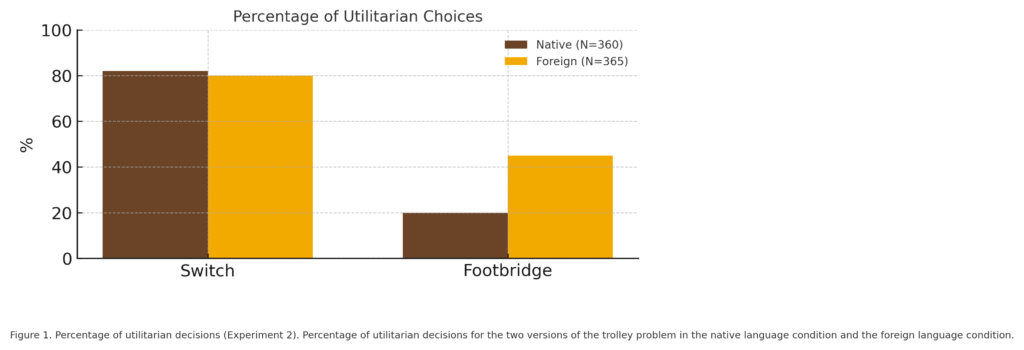
For eCommerce, this has profound implications:
- Emotional Purchases: For products that rely on desire and feeling, like products tied to lifestyle, fashion, or personal taste, a native-language experience is your best move. It taps into the limbic system, fostering an emotional connection that drives desire and brand loyalty. The phrase “Free Returns” in a shopper’s own language, for instance, triggers feelings of trust and security, not just a logical understanding of the policy.
- Analytical Purchases (Tech, SaaS): For complex or high-value products, a bilingual interface can sometimes reduce emotional bias, helping customers feel they are making a more objective, well-reasoned choice.
Language is like the bedrock of native-language eCommerce trust. An unfamiliar language creates psychological distance, making shoppers more cautious. A native language closes that distance, fostering an environment of comfort and confidence.
When information is presented clearly and naturally, it eliminates doubt and builds confidence in your brand. In fact, 71% of consumers state they need to trust a brand before making a purchase. Speaking their language is the first and most critical step in establishing that trust.
Cognitive Fluency: The Brain’s Preference for “Easy”
The human brain is wired to prefer things that are easy to process. This psychological principle, known as the fluency heuristic, is a powerful driver in user experience. When a website is in a user’s native language, everything from navigation to product descriptions is processed with less mental effort. This ease creates a subconscious feeling of comfort and trustworthiness.
This approach has a direct impact on user behavior:
- Increased Engagement: Eye-tracking studies show that users spend more time on content in their own language, even if they are proficient in English.
- Lower Bounce Rates: Small localization tweaks, such as using familiar syntax and terminology for shipping or currency, can cut bounce rates.
- Higher Trust: A staggering 75% of online shoppers prefer to buy products with information presented in their own language.
An effective website localization for eCommerce is a game-changer for any business looking to expand into a new market. However, that localization should be founded on comprehending the consumer psychology in eCommerce, cultural norms, and the cognitive tendencies that influence purchasing decisions. This is the heart of customer psychology in localization!
Beyond Words: Adapting UX to Culture and Behavior
A truly localised UX global eCommerce strategy goes far beyond translation; it requires cultural adaptation for eCommerce. This means re-engineering the user journey to align with local behaviors and cultural symbols.
This is why you need to have a thorough knowledge of how different societies perceive symbols, colors, and even website layouts. What works in one market can be confusing or off-putting in another.
Cultural Semiotics: The Meaning of Colors and Symbols
Cultural semiotics—the study of signs and symbols—is critical for global eCommerce UX design. Colors, icons, or metaphors are completely different in each society:
- Colors: Red signifies urgency or a sale in Western cultures, but it represents luck in China and can be a symbol of warning in some parts of Africa.
- Icons: A “piggy bank” icon for savings is widely understood in North America but may be inappropriate in Muslim-majority markets where porcine imagery is offensive.
- Metaphors: A “home” icon on a website might signal family and intimacy in individualistic Western cultures, while in collectivist African cultures, it could evoke a stronger sense of safety and community protection.
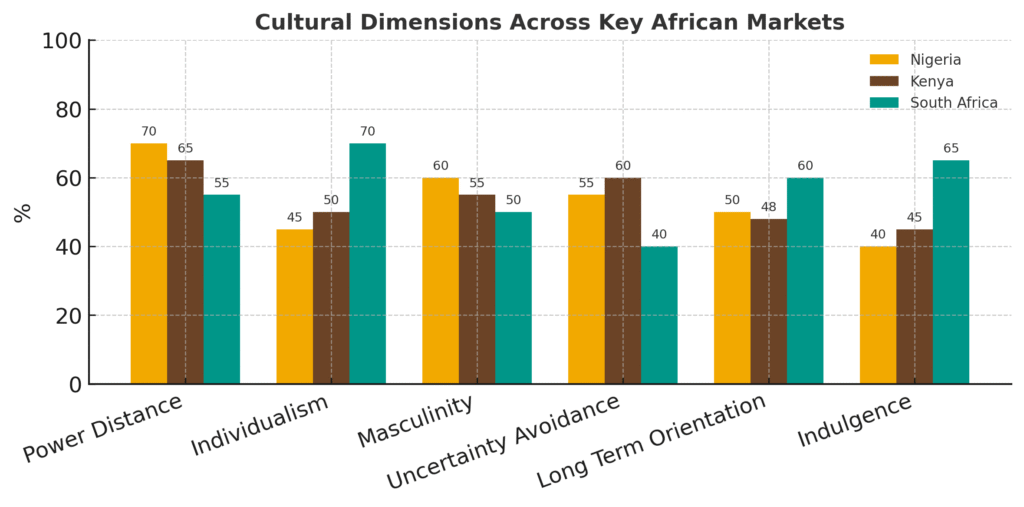
Behavioral Design and Hofstede’s Dimensions
Your website’s layout and flow should adapt to the decision-making heuristics of your target market. This is where the Hofstede cultural dimensions model becomes handy, providing a framework for this:
- High Uncertainty Avoidance (e.g., Germany, Japan): Users from these cultures prefer clear, linear, and predictable checkout processes with detailed information at every step. They need reassurance and expect contextual help messages.
- High Collectivism (e.g., Brazil, South Korea): Shoppers value social proof. Displaying testimonials, user reviews, and social media validation early in the journey is highly effective.
High Power Distance (e.g., many Asian and Latin American markets): Authority is respected. Featuring expert endorsements or official certifications can significantly boost credibility.
Voice Search and AI-Powered Multilingual CX
The rise of voice search and AI chatbots is adding another layer to the multilingual eCommerce user experience. People express themselves differently when they speak compared to when they type, and these patterns are language-dependent.
For example, an English speaker might search for “best affordable perfume.” An Arabic speaker might ask, “عطر حلو وسعره مناسب” (a nice-smelling perfume at a suitable price), using more emotional and sensory language.
Your AI and voice search strategy must be sophisticated enough to understand this semantic nuance, not just the literal translation.
The eCommerce Trust Loop: A Framework for Native-Language Conversion
Building trust in a multilingual eCommerce experience is a continuous cycle. A failure at any stage can lead to cart abandonment and a permanent loss of the customer.
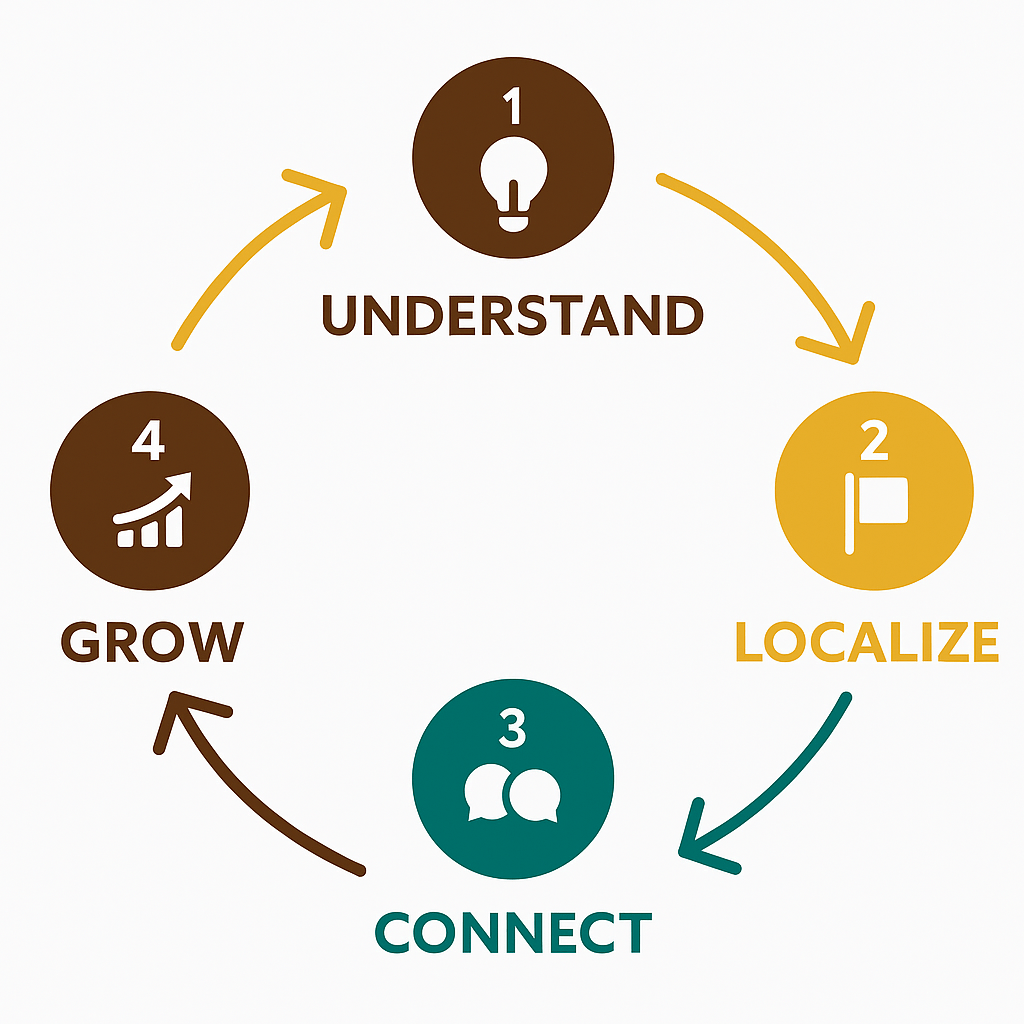
- Recognition (Language Familiarity):
The journey begins when a user lands on a website that instantly speaks their language. That’s why a language auto-detection or an easily accessible switcher on your website is a must.
- Comfort (Cultural Tone & Predictable UX):
The user feels at ease because the site’s layout, imagery, and tone align with their cultural expectations. You need to adapt your online presence to the behavioral norms.
3. Confidence (Clear Information & Social Proof):
Leading your customers to have confidence in your product is the ultimate conversion tool. Build confidence with high-quality product images, detailed descriptions, and, most importantly, localized social proof. This is because linguistic alignment activates an “in-group” trust bias, as people tend to subconsciously trust individuals or entities that share their linguistic and cultural background.
For instance, a case study on IKEA’s entry into the Middle Eastern market highlighted the importance of a robust Arabic localization strategy, which contributed to a 17% sales increase in the largest Middle Eastern countries.
- Commitment (Frictionless Checkout & Reassurance):
The checkout is the final and most critical stage of the user journey. A poorly designed or confusing localized checkout flow will lead to abandoned carts. According to reports, unexpected costs are the top reason for cart abandonment, an effect that is amplified by language barriers.
Key Elements of a Localized Checkout:
- Local Payment Methods: Offering familiar payment options is essential. This could be Alipay in China, Klarna in Europe, or Boleto Bancário in Brazil.
- Transparent and Localized Costs: Display all prices in the local currency. Be upfront about taxes, duties, and shipping fees. The “zero price effect,” such as offering free delivery, is a powerful motivator, as 75% of consumers expect it even for small orders.
Adapted Form Fields: Ensure address and phone number fields match local conventions. Forcing a user into a format designed for another country is a major point of friction. - Trust Signals and Support: Translate all checkout elements, including error messages, security badges, and links to customer support. Offering multilingual support at this stage can be the deciding factor for a customer to complete their purchase.
Conclusion
Multilingual eCommerce user experience is a powerful engine for achieving eCommerce localization conversion. This requires a fundamental shift from simply translating words to localizing the entire customer journey.
The entire project can be viewed as a software localization process for your digital platform, where every element is adapted for the end-user. By leveraging the principles of consumer psychology, cultural adaptation, and cognitive ease, you can break down barriers to trust and create a shopping experience that feels native, intuitive, and secure for every customer.
Ready to build a multilingual experience that truly connects and converts? Contact the experts at Afrolingo today to craft your global growth strategy.
FAQs
What is a multilingual customer experience in eCommerce?
It is the practice of designing every touchpoint of an online shopping journey—from the homepage and product descriptions to checkout and customer support—in the customer’s native language and cultural context.
Why does language matter for customer psychology in eCommerce?
Language is directly tied to emotion and cognitive ease. Native languages foster emotional connection and trust, while foreign languages can create psychological distance and trigger more cautious, analytical behavior, often reducing the likelihood of an impulse purchase.
How does multilingual UX affect conversion rates and customer loyalty?
A strong multilingual UX improves comprehension and trust, which directly boosts conversion rates. One study noted a 2x increase in conversions after adding multiple languages. It builds loyalty by making customers feel valued and understood, encouraging repeat business.
What are the key behavioral or emotional triggers you should localize?
Key triggers include trust signals (localized reviews, security badges), urgency (scarcity messaging like “Only 2 left in stock”), social proof (testimonials from local customers), and cognitive ease (clear, simple navigation and familiar terminology).
How do you design an effective multilingual eCommerce checkout experience?
An effective design includes local currency and payment methods, culturally appropriate form fields, transparent costs (taxes, shipping), and fully translated error messages and customer support information.
How much does localization of customer experience cost, and is it worth it?
Costs vary based on the number of languages and the depth of localization. However, the ROI is significant, with the potential to increase revenue by up to 200% from cross-border sales. [2]Given that 55% of consumers will only buy in their mother tongue, the investment is essential for global growth.
What metrics should you track to measure multilingual eCommerce experience success?
Track conversion rates by language/region, bounce rates on localized pages, cart abandonment rates, customer satisfaction (CSAT) scores from multilingual support, and organic search rankings for localized keywords.