Skip to content


While geographical barriers no longer exist in the digital marketplace, language barriers are still there, and they could be a deal breaker for many businesses looking for global expansion. That’s why multilingual eCommerce has become one of the strongest drivers of expansion.
Looking at the global leaders like Amazon, Jumia, and Shein, as a benchmark, it doesn’t take much to realize that all the best multilingual ecommerce Stores have one thing in common: a solid, well-planned, localized digital presence and a heavy investment in website translation for online stores.
These examples highlight a simple truth: when customers feel understood in their own language, they are more likely to buy, return, and remain loyal. The digital shelf is global, but the customer experience must remain deeply local. How can you do? And how can your business become one of the best multilingual eCommerce stores? Let’s dive in!
Why Go Multilingual? The Data Behind the Decision
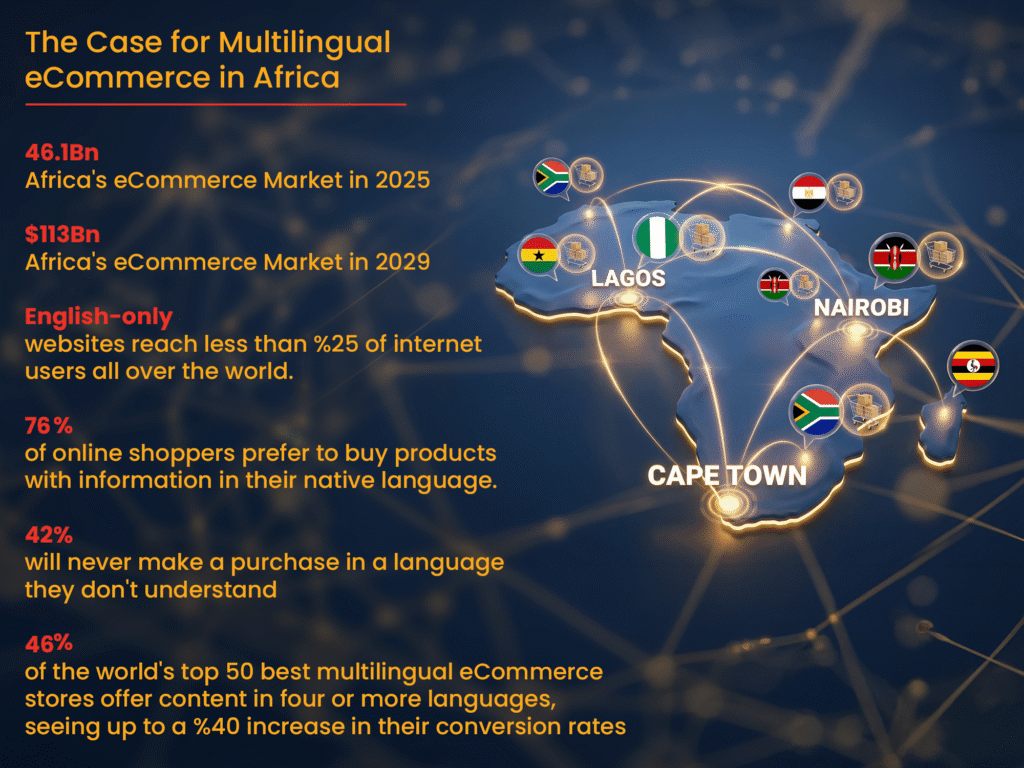
Before diving into the “how,” we need to understand the “why” you should bother with global expansion for eCommerce and try to be one of the best multilingual eCommerce stores in the first place through the lens of hard data. English may be the lingua franca of the internet, but it is not the language of conversion.
African eCommerce is projected to reach $46.1 billion by 2025 and $113 billion by 2029, driven by a mobile-first population. However, your business can’t benefit from that with an English-only platform. Studies show that English-only websites reach less than 25% of internet users all over the world.
Having a multilingual digital presence will help your business with:
· Trust and Conversion: CSA Research indicates that 76% of online shoppers prefer to buy products with information in their native language. Also, a staggering 42% will never make a purchase in a language they don’t understand.
· Customer Lifetime Value (CLV): Localized support and post-purchase communication increase retention rates. Customers feel valued when a brand speaks their language, literally and culturally.
· Search Visibility: A single-language site competes for global traffic. A multilingual site captures local intent. A user in Egypt searching for “mobile phones” (English) and “موبايلات” (Arabic) represents two different entry points that a localized site can capture simultaneously.
It is worth mentioning that 46% of the world’s top 50 best multilingual eCommerce stores offer content in four or more languages. The data reveals that thanks to localization, these multilingual eCommerce stores see up to a 40% increase in their conversion rates.
Top 3 ECommerce Platforms Powering Multilingual Success
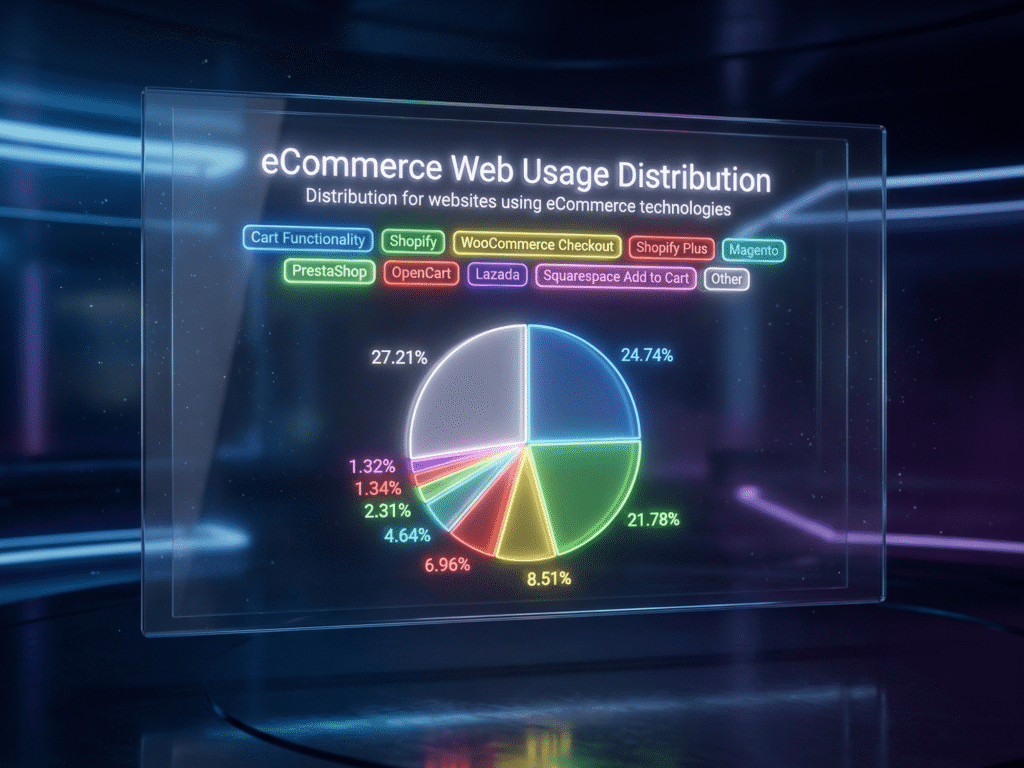
Choosing the right infrastructure is the first technical hurdle. While many CMS options exist, three platforms dominate the landscape for their ability to handle internationalization (i18n) for eCommerce and facilitate seamless localization integrations.
1. Shopify (and Shopify Plus)
Shopify has emerged as a leader in user-friendly multilingual eCommerce, particularly with the introduction of Shopify Markets. It is the go-to for brands wanting speed and ease of use.
- Why it works: Built-in language translation, multi-currency support, localized domain management, and region-specific pricing rules, the platform allows merchants to manage a single store while customizing currency, language, and domain for different regions (e.g., store.co.za vs store.ng). It integrates seamlessly with Paystack and Flutterwave, allowing merchants to accept payments in Naira, Cedis, Rand, and USD simultaneously, which is critical for cross-border African trade.
- Integration: It integrates seamlessly with translation apps and professional localization APIs, allowing for automated content export/import.
2. Adobe Commerce (formerly Magento)
For organizations with complex international requirements, Magento (now Adobe Commerce) offers unparalleled customization capabilities. Its open-source foundation allows for deep customization of every aspect of the multilingual experience.
- Why it works: Its “Store View” architecture is unmatched. You can run multiple localized versions of a store from one backend panel, allowing for entirely different product catalogs, pricing structures, and designs per region, not just translated text. You can run a store for Egypt (Arabic/English, EGP currency) and a store for Nigeria (English, NGN currency) from one backend.
- Technical Edge: It offers robust handling of right-to-left (RTL) language support like Arabic out of the box, provided the theme supports it.
3. WooCommerce
Built on the world’s most popular content management system, WooCommerce offers seamless integration for businesses already invested in the WordPress ecosystem. This WordPress plugin is ideal for unifying content and commerce across language barriers.
- Why it works: Compatibility with WordPress multilingual plugins, support for 140 region-specific payment gateways, and flexible shipping and tax configurations. The extensive plugin library enables merchants to add virtually any localization capability needed. It is open-source, meaning developers can build custom integrations for niche local logistics providers (like Sendy in Kenya) without waiting for official support.
- Flexibility: It is highly cost-effective for startups but scales well for mid-sized enterprises. However, it requires more maintenance regarding plugin updates and compatibility.
Top Multilingual eCommerce Sites: 5 Inspiring African Examples
By looking at some of the best multilingual eCommerce stores in Africa, it is easy to see that true localization goes beyond Google Translate. It involves currency, cultural norms, and “Logistics Localization.
Here are five brands setting the benchmark!
1. Jumia (Pan-African)
Jumia is the gold standard for top multilingual eCommerce sites in Africa.
- What they do well: They operate distinct storefronts for 11 countries (e.g., Jumia Nigeria, Jumia Egypt, Jumia Kenya).
- The “Why”: They localize trust. In Egypt, the site is fully bilingual (Arabic/English). In Nigeria, they emphasize “Pay on Delivery” to overcome trust barriers. Their “JumiaPay” system is adapted to each country’s preferred banking method, solving the fragmented payment puzzle.
2. Amazon Egypt (formerly Souq)
Amazon’s entry into Egypt is a masterclass in global eCommerce website examples, adapting to local needs.
- What they do well: The site offers a flawless toggle between English and Arabic. When switched to Arabic, the entire layout mirrors (RTL), placing navigation bars on the right.
- The “Why”: They integrated local installment plans. Recognizing that high-ticket items are difficult for cash buyers, they partnered with local banks and fintechs (like ValU) to offer interest-free installments directly on the product page—a critical localized conversion driver.
3. Kilimall (Kenya, Uganda, Nigeria)
Kilimall serves as a powerful example of a successful cross-border eCommerce localization strategy leveraging language to bridge diverse African markets.
- What they do well: They provide a robust Multilingual interface that supports English, Swahili, and French. This allows them to cater effectively to Anglophone East Africa, Swahili-speaking populations, and potentially Francophone regions.
- The “Why”: By offering Swahili, they democratize access to online shopping for millions of Kenyans and Tanzanians who feel more comfortable in their national language than in English. Furthermore, their deep integration of M-Pesa payments creates a frictionless experience where language and currency work in harmony to lower barriers to entry.
4. Takealot (South Africa)
While primarily English, Takealot is the leader in “Logistical Localization.”
- What they do well: They have mastered the “last mile” in a country with complex addresses by innovating in local shipping and fulfillment.
- The “Why”: They introduced “Takealot Pickup Points” across the country. This solves two African problems: high delivery fees and the difficulty of ensuring someone is home to receive a package. It is a user experience (UX) adaptation that functions like a language of convenience.
5. Shein (Global entrant into Africa)
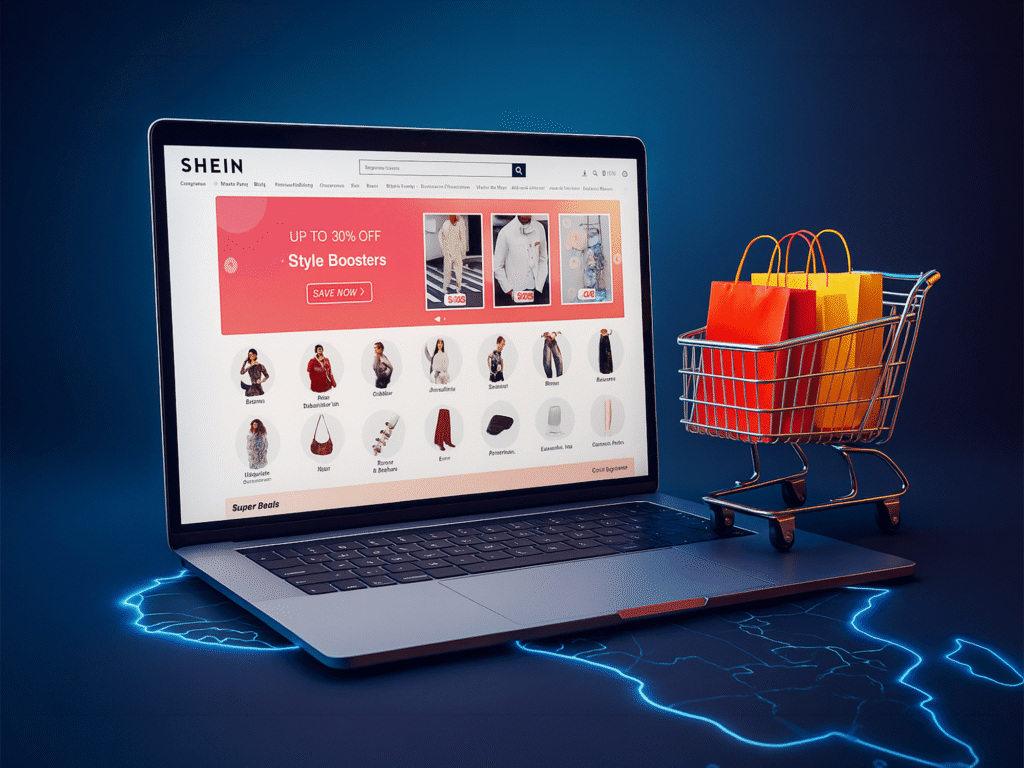
Shein is an example of aggressive, automated localization.
- What they do well: They offer multi-currency support for almost every African currency, calculated in real-time.
- The “Why”: Beyond pricing transparency, they excel at localized marketing content. They heavily utilize local micro-influencers on TikTok to bridge the cultural gap, proving that “localization” involves the images and voices you use on social media, not just the text on your website.
How to Create a Multilingual eCommerce Strategy for Africa
Building a store that rivals these giants requires a deliberate roadmap. It is not enough to translate words; you must translate the experience, AKA Localize!internationalization (i18n) for eCommerce
Market and Language Prioritization
Do not attempt to launch in all 54 countries.
- Region First: Group markets by language blocks.
- North Africa: Arabic (Modern Standard) + French (Business).
- West Africa: English (Nigeria/Ghana) + French (Côte d’Ivoire/Senegal).
- East Africa: English + Swahili (Kenya/Tanzania).
- Infrastructure Check: Prioritize countries with established digital payment infrastructure (e.g., Kenya’s M-Pesa ecosystem or Nigeria’s switch).
Leverage a Localization Platform
To streamline the workflow, avoid manual spreadsheets. Use a Translation Management System (TMS).
- Connectors: Use a platform that connects directly to your CMS via API.
- Continuous Localization: As you add new products, the system should automatically detect new text strings.
- Terminology Management: In Africa, terms like “Soda” vs “Mineral” or “Bakkie” (pickup truck in SA) vs “Truck” matter. A TMS ensures these regional terms remain consistent.
Translation Technology: Human-Led AI
The sheer volume of SKUs in eCommerce makes 100% human translation expensive, but 100% AI is risky.
- Machine Translation (MT): Use AI for user reviews and technical specs.
- Human Expert Review: For marketing banners, homepages, and legal terms, native language professionals are non-negotiable.
- The Afrolingo Difference: We combine AI efficiency with the cultural nuance of native African linguists to ensure your “Sales” banner doesn’t accidentally translate to “For Sale” (as in, the company is being sold).
Optimize with African SEO
The eCommerce store translation best practices require local keyword research.
- Dialects: An Egyptian user searches for “mobile” (موبايل), while a Gulf user might search for “jawwal” (جوال). Standard Arabic misses these nuances.
- Lite Versions: Multilingual SEO in Africa heavily penalizes slow sites. Optimize your code to load fast on mobile networks (3G/4G).
Localize the Transaction (Payments & UX)
Translation is only 20% of the work. The rest is international UX design and payments.
- Payment Methods: You must offer Mobile Money (M-Pesa, MTN Mobile Money), Card, and Cash on Delivery (COD). COD is often the only way to gain trust with first-time buyers.
- Forms: Simplify checkout forms. In many African cities, zip codes are not used or are unknown. Remove “Zip Code” as a required field to reduce cart abandonment.
Assemble a Team of Native Language Professionals & eCommerce Experts.
Tools can handle quantity, but only a specialized team can handle quality. A successful strategy relies on:
- Native Linguists: To capture the “street slang” (Sheng in Kenya, Pidgin in Nigeria) that makes marketing copy go viral.
- Subject Matter Experts: To ensure technical descriptions (e.g., electronics or cosmetics) are accurate.
- Technical QA Testers: To verify that the localized site functions correctly on local devices and browsers, ensuring RTL layouts don’t break the checkout flow.
- The Afrolingo Advantage: We provide this exact ecosystem. By combining native linguistic talent with deep eCommerce expertise, we ensure your expansion is not just translated but fully operationalized for the African market.
Conclusion
The best multilingual eCommerce stores in Africa share one common trait: they treat the continent not as a single country, but as a diverse collection of unique markets. They move beyond simple translation to achieve true cultural adaptation in eCommerce.
Ready to transform your store into a Pan-African powerhouse?
Don’t let language or cultural barriers limit your growth. Partner with Afrolingo for expert, human-led localization services. Whether you need technical consultation for Arabic RTL support or native linguists to refine your Swahili marketing copy, we ensure your message resonates across the continent. Contact us today to start your global journey.
FAQs
What are the 4 types of e-commerce?
The four main models are B2B (Business to Business, like manufacturers selling to distributors), B2C (Business to Consumer, like Jumia), C2C (Consumer to Consumer, like Jiji or OLX), and C2B (Consumer to Business, like freelance marketplaces).
What are the 7 e-commerce models?
Beyond the main four, the expanded list includes Government to Business (G2B), Business to Government (B2G), and Consumer to Government (C2G). In Africa, G2C (Government to Citizen) is growing for utility payments and tax services online.
What is Black Friday in eCommerce?
Black Friday is a major sales event in November. In Africa, Jumia pioneered localized versions like “Jumia Black Friday,” often extending it to a month-long event to alleviate logistics pressure and accommodate pay cycles (which are often monthly).
What is an e-commerce platform?
An e-commerce platform is the software that powers your online store, handling product management, marketing, and checkout. For the African market, the best platforms allow for integration with local logistics (last-mile delivery) and local payment methods.