Skip to content


Global eCommerce has been a game-changer for businesses, connecting the whole world and making it one big market! For any business looking to stay in the race, having a multilingual ecommerce website—especially in markets like the African market—has become a must…And thanks to Shopify, it is not hard to get!
Shopify has evolved significantly in its approach to international e‑commerce with its Shopify Markets and Shopify Markets Pro, providing you with an easy way to have a multilanguage Shopify store for your business, making the world your oyster!
In this guide, we take a closer look at multilanguage Shopify, why your business needs it in Africa, and how it can help take your business to the next level in Africa!
The Pan-African Business Case: Why Your Business Needs Multilanguage Shopify!
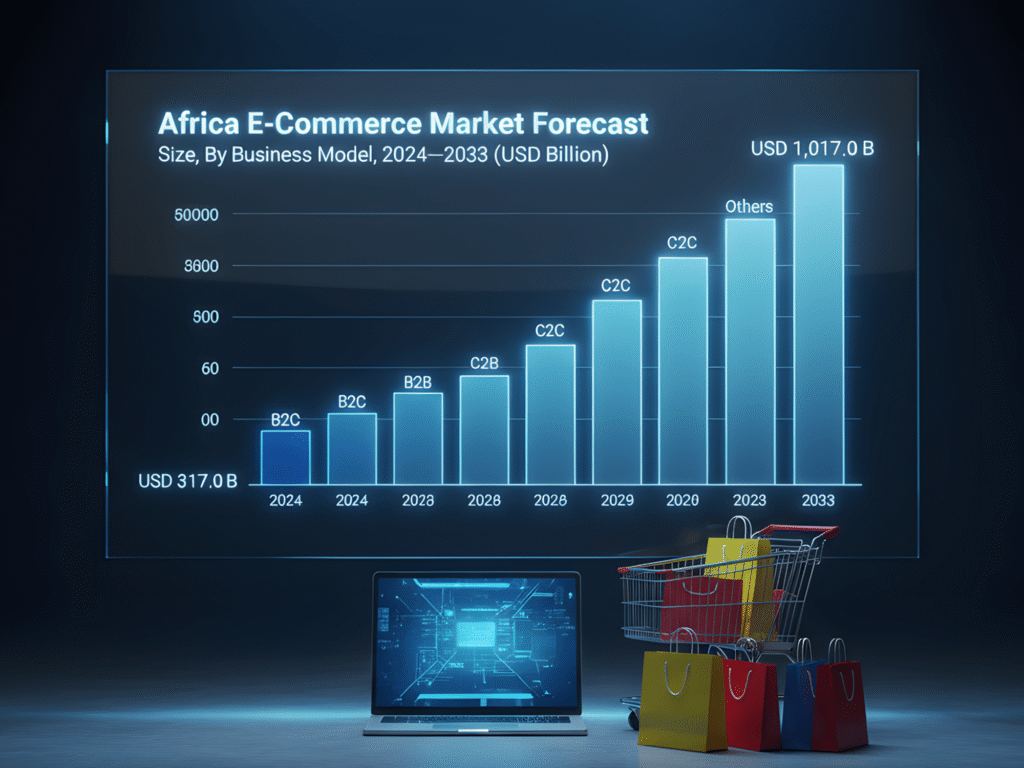
Africa’s ecommerce landscape is experiencing explosive growth, with the market projected to reach $1017.0 billion during 2025-2033. However, the African market is not like any other; this is a continent that is home to over 2,000 distinct languages. Africa presents unique challenges and opportunities for multilingual ecommerce.
While colonial languages like English, French, and Portuguese are common in business, a vast number of consumers think, search, and shop in their native tongues like Swahili, Hausa, Yoruba, Zulu, and Amharic. Operating solely in English creates a significant barrier, alienating a large portion of your potential customer base.
A multilanguage Shopify strategy offers your business:
· Expanded Market Reach: Directly access millions of new customers in their preferred language, tapping into previously unreachable markets. Over 140 million Africans speak French, yet many Nigerian and South African stores remain English-only. Adding French can immediately open up markets like Côte d’Ivoire, Senegal, and DRC.
· Increased Conversion Rates: Brands that translate their stores see an average 13% increase in conversions. Providing a native-language shopping experience builds immediate trust and reduces friction at checkout.
· Enhanced Customer Trust and Loyalty: A localized shopping experience demonstrates a genuine commitment to understanding and serving the local market, fostering stronger customer relationships. A localized interface (in Swahili or Arabic) significantly lowers the “trust tax” for first-time digital buyers who are wary of scams.
· Competitive Advantage: Many international brands apply a one-size-fits-all approach to Africa. A deeply localized, multilingual ecommerce website will set you apart, creating a more inclusive and relevant brand perception. Africans often search in a mix of languages. A user in Nairobi might search for “best running shoes” in English but “bei ya viatu” (price of shoes) in Swahili. Multilingual stores capture both intents.
Setting Up Your Multilingual Shopify Store: A Technical Guide
What sets the multilanguage Shopify apart from other platforms like Bigcommerce multilingual is that Shopify’s native tools have improved greatly over the years, but do they hold up against the specific needs of African merchants? Creating a Shopify multi-language store can be approached in several ways. The best method depends on your technical expertise, budget, and the scale of your international ambitions.
Shopify’s Native Tools: Shopify Markets
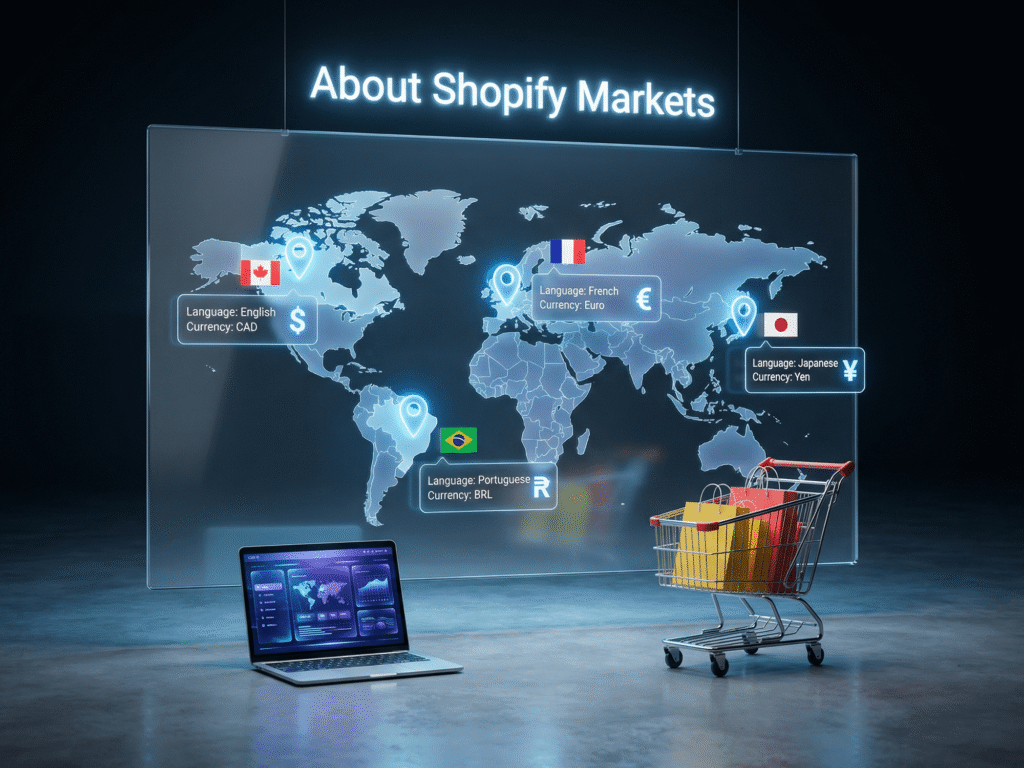
Introduced in 2021, Shopify Markets is a powerful, built-in tool designed to simplify cross-border commerce from a single dashboard.
- Core Features:
- Multi-language: Add up to 20 languages to your store. When a customer visits from a specific region, your store can automatically display the translated version.
- Multi-currency: Display prices in over 136 local currencies, automatically converting based on current exchange rates to reduce cart abandonment.
- Domains and SEO: Set up localized domains (e.g., yourstore.co.za) or subdirectories (e.g., yourstore.com/za-en) for each market to improve international SEO.
- Payment Methods: Integrate local payment gateways popular in your target countries.
- How to Get Started:
1- From your Shopify admin, navigate to Settings > Markets.
2- Click Create market and select the countries you wish to target (e.g., creating a “West Africa” market including Nigeria and Ghana).
3- Once the market is created, go to Languages within that market’s settings and add your desired languages.
4- Shopify will prompt you to install its Translate & Adapt app, which can provide automatic translations for up to two languages for free.
Third-Party Translation Apps
While Shopify’s native tools are excellent, dedicated translation apps offer more advanced features for businesses looking to scale. These apps typically add a user-friendly language selector in Shopify storefronts, allowing customers to easily switch between languages.
Localization for Shopify Stores in Africa
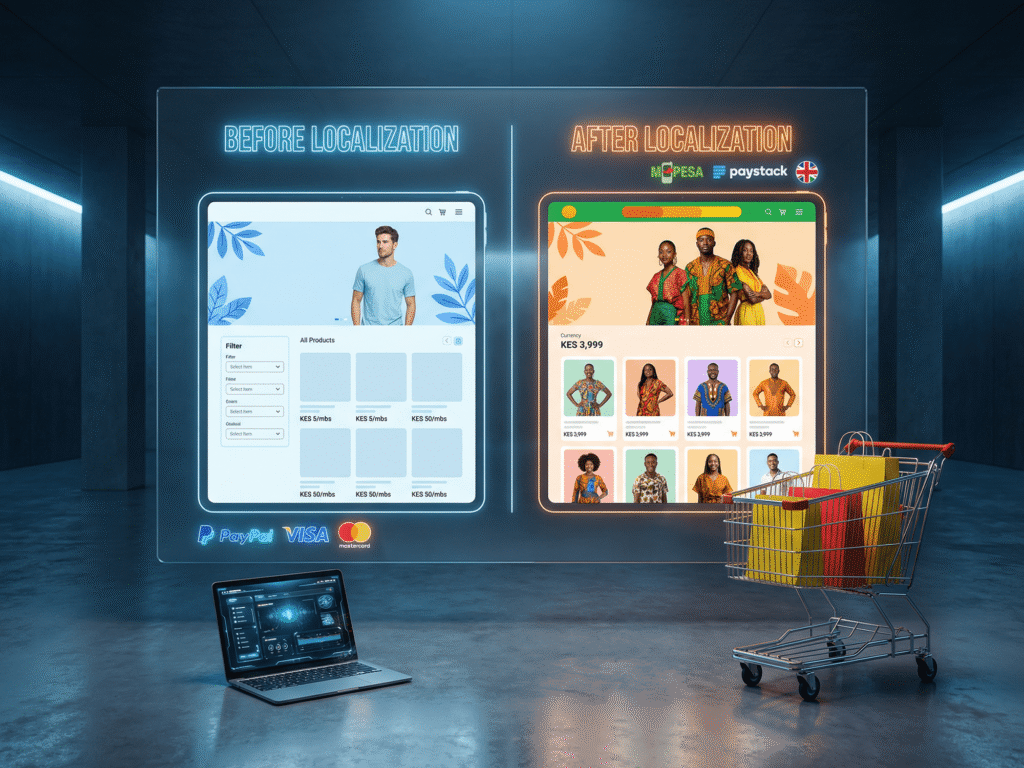
To have a working multilanguage Shopify strategy for Africa, you need to go beyond word-for-word translation; your Shopify store localization needs a deep cultural adaptation of the entire shopping experience. This involves managing all translations and localized content on Shopify with care.

Local Currencies & Payments: The Key to Checkout
Payment preferences vary drastically across the continent. While card payments are common in South Africa, mobile money works better in East and West Africa.
- Mobile Money: Services like M-Pesa (dominant in Kenya and Tanzania), MTN Mobile Money, and Airtel Money are essential.
- Pan-African Gateways: Companies like Paystack (for Nigeria, Ghana, South Africa, Kenya) and Flutterwave provide a unified solution to accept a wide range of payment methods, including cards, bank transfers, and mobile money across multiple countries.
- Cash on Delivery (COD): Despite the rise of digital payments, COD remains a popular option in many regions due to a trust deficit in online payments.
Navigating Logistics and Shipping
Logistics in Africa present unique challenges, from inconsistent addressing systems to cross-border complexities.
- Last-Mile Delivery: In many urban areas, informal addressing makes delivery difficult. Partnering with local courier services that use motorcycle riders (“bodabodas” or “okadas”) can be highly effective.
- Collection Points: Collaborating with established retail chains or setting up pick-up points can be a reliable alternative to home delivery.
- Cross-Border Trade: The African Continental Free Trade Area (AfCFTA) has made customs and tariffs a lot easier, but navigating different regulations remains a hurdle. Using a third-party logistics (3PL) partner with experience in the region will help make things go much smoother.
Cultural Adaptation
The localization process is a lot more than just translating word-for-word; it is about ensuring your brand resonates on a cultural level. This includes:
- Imagery and Marketing: Use models and settings that reflect your target audience. A campaign featuring winter coats will not land well in a country like Lagos, where the weather is usually warm!
- Product Descriptions: The process of creating an authentic Localizing product catalog is important. Go beyond translation to adapt sizing (UK vs. US vs. local), measurements (metric vs. imperial), and product names to align with local colloquialisms.
- Holiday Calendars: Tailor your promotions to local holidays and events like Eid or national independence days, not just Black Friday or Christmas.
SEO Architecture: Ranking in Multiple African Regions
Translating your global Shopify store is only half the battle; you also need to optimize it so that customers can find you. You need to focus on creating a well-planned Localized SEO for Shopify strategy.
Keyword Research in Local Languages
Do not simply translate your English keywords. Users in different regions search with different intent and phrasing.
· Action Item: Use SEO tools to conduct keyword research specifically for each target language and country. For example, someone in Johannesburg might search for “buy running shoes,” while someone in Nairobi might search for “nunua viatu vya kukimbia.” Pay attention to local dialects and slang.
URL Structure and Hreflang Tags
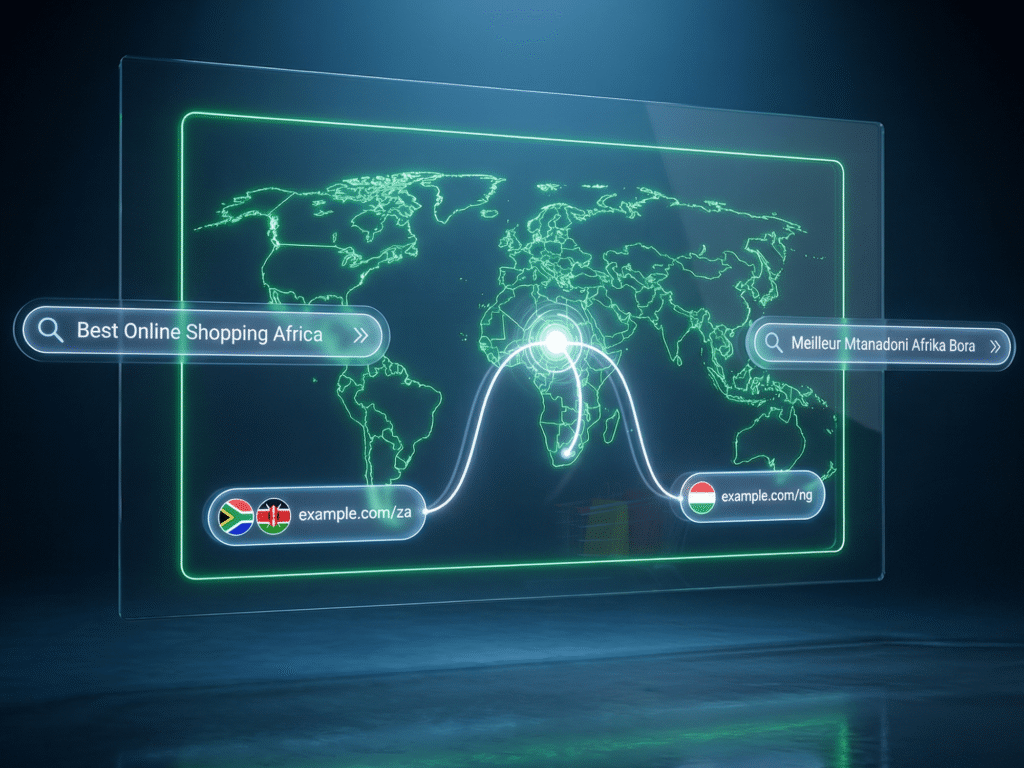
Search engines need to understand which version of your site to show to which user.
· URL Structure: With Shopify Markets, you can choose between:
o Subdirectories (Recommended): yourstore.com/fr for France. This consolidates SEO authority to your main domain.
o Subdomains: fr.yourstore.com. This can be useful but may dilute SEO authority.
· Hreflang Tags: These are code snippets that tell search engines like Google about pages that are similar in content but are targeted to different languages or regions. This is crucial for avoiding duplicate content issues and ensuring the correct page ranks in the correct country. Most reputable Shopify translation apps will automatically implement hreflang tags for you.
Localized Customer Support
Offering customer support in local languages is a powerful way to build trust. This can range from a translated FAQ page to hiring local support agents or using a service like Afrolingo to provide multilingual chat and email support.
Final Thoughts
Expanding your multilanguage Shopify store into the African market is a journey that requires careful planning and a deep commitment to localization. By embracing a rounded international Shopify localization strategy, you can build a brand that truly connects with millions of new customers.
Ready to unlock your store’s potential across Africa? A thoughtfully executed multilingual ecommerce strategy is your key to success. If you need expert guidance in navigating the nuances of language and culture, Afrolingo’s eCommerce localization services are here to help you connect with your African audience authentically and effectively.
Frequently Asked Questions (FAQs)
Does Shopify support multiple languages?
Yes, Shopify natively supports selling in multiple languages through its Shopify Markets feature. You can add up to 20 languages to your store, and with the help of the Translate & Adapt app or other third-party translation apps, you can translate your store’s content, including products, collections, and checkout pages.
How to sell to multiple countries on Shopify?
The best way to sell to multiple countries is by using Shopify Markets. This tool allows you to create specific “markets” (groups of countries) and customize the shopping experiences for each one. You can set local currencies, languages, domains, and international pricing, all managed from a single Shopify admin dashboard.
Can you use Shopify internationally?
Absolutely. Shopify is a global platform designed for international e-commerce. Features like Shopify Payments, which support multiple currencies, and Shopify Markets, which handle localization, make it one of the most powerful platforms for selling to a global audience.
What is the best language translator for Shopify?
The “best” translator depends on your needs. For a simple, free start, Shopify’s own Translate & Adapt app is excellent. For more advanced features, scalability, and higher-quality automated translations, apps like Weglot, Langify, and LangShop AI are popular choices among merchants for building a comprehensive multilanguage Shopify store.