Skip to content


The holidays are coming, and with them come a great deal of online shopping and business opportunities! However, while Africa may be a goldmine of unique potential, but the eCommerce holiday season in Africa can be a bit tricky for any brand to navigate.
Winning the holiday season ecommerce in this dynamic continent isn’t about copy-pasting a Black Friday strategy; it’s about deep, authentic localization. The African eCommerce market is on an impressive rise, yet many international brands fail to connect because they overlook the diverse cultural and linguistic nature of the continent.
In this guide, you’ll find the playbook for ensuring your ecommerce holiday marketing campaigns resonate, convert, and build lasting customer loyalty.
Understanding the African Holiday Shopper
To win the eCommerce holiday season in Africa, you must first understand that the shopping calendar is as diverse as the continent itself. While Black Friday has gained significant traction, it shares the stage with an array of regional holidays and sales events that command consumer attention.
Key Holiday Shopping Peaks Across Africa:

- Nigeria: The season is dominated by Black Friday and Cyber Monday, but local giants have also carved out their own major events, like Jumia’s “Black Friday” campaign that runs for a month and Konga’s Yakata Sales (“Yakata” meaning “completely” or “utterly” in Nigerian pidgin), which is their equivalent of Black Friday.
- South Africa: Black Friday has become a major retail event, followed closely by traditional Christmas and Boxing Day sales, which see significant online traffic.
- Kenya: Besides Christmas, Jamhuri Day (December 12th) often features patriotic-themed sales.
- Egypt & North Africa: The concept of White Friday (a culturally adapted version of Black Friday) is immensely popular. Additionally, there are other holiday shopping peaks around Ramadan, which often involve gift-giving and festive purchases.
Consumer Behavior Deep Dive:
In Africa, one-size-fits-all approach to user experience is doomed to fail. To make an impact, you must adapt to local behaviors:
- Mobile-First Dominance: For a vast majority of African shoppers, the primary and often only point of internet access is a smartphone. This makes a seamless, fast-loading mobile site and app experience non-negotiable.
- Payment Flexibility is Key: While credit card usage is growing, mobile money services like M-Pesa in Kenya, MTN Mobile Money in Ghana and Nigeria, and various local bank transfer apps are dominant. A lack of these payment options at checkout is a primary driver of cart abandonment.
- The Power of Social Commerce: Platforms like WhatsApp, Instagram, and Facebook are not just for discovery; they are vital sales channels. Many African consumers prefer to inquire, negotiate, and even complete purchases via direct messaging.
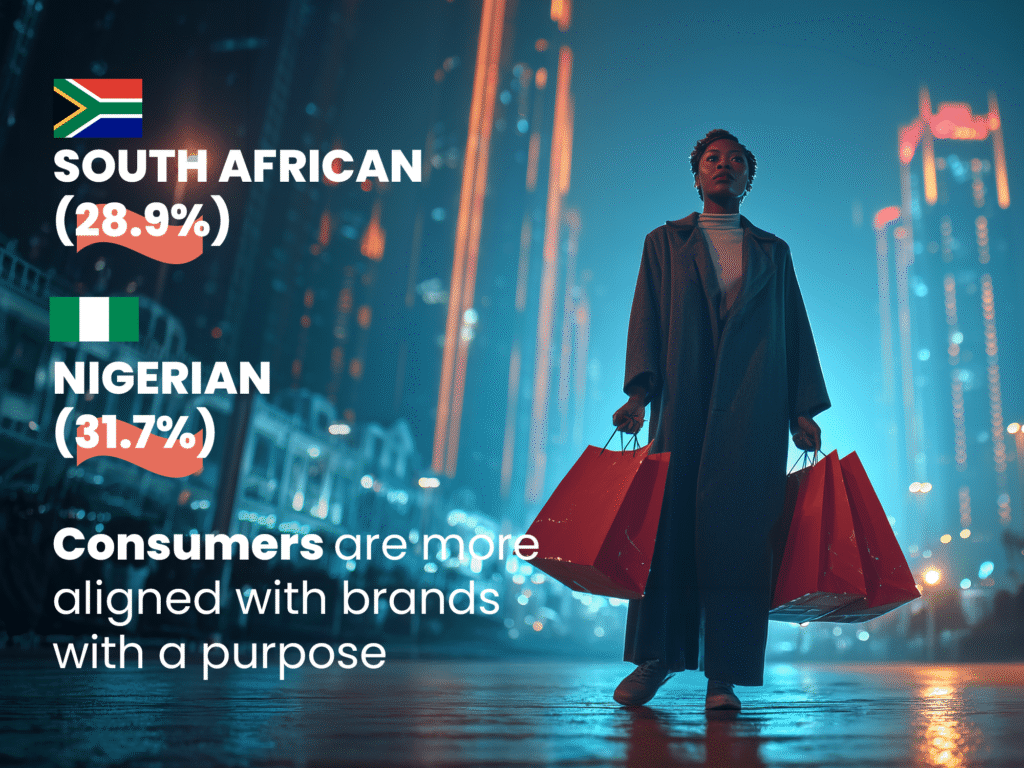
- The Rise of the Purpose-Driven Consumer: It’s no longer just about price; consumers are increasingly making decisions based on brand values. Recent data shows that a significant portion of consumers in South Africa (28.9%) and Nigeria (31.7%) were more aligned with brands with a purpose. This means your brand’s story, commitment to sustainability, or community impact can be a powerful tool for connection and conversion during the competitive eCommerce holiday season.
Understanding these core holiday ecommerce trends is the first step toward maximizing your holiday ecommerce sales.
Pre-Holiday Prep: Localizing Your Digital Storefront
Your website or app is your digital flagship, so before the holiday traffic hits, it must be meticulously localized to build trust and drive conversions. A multilingual ecommerce approach that goes far beyond simple translation is your best course of action here.
Website & App Localization that Converts:
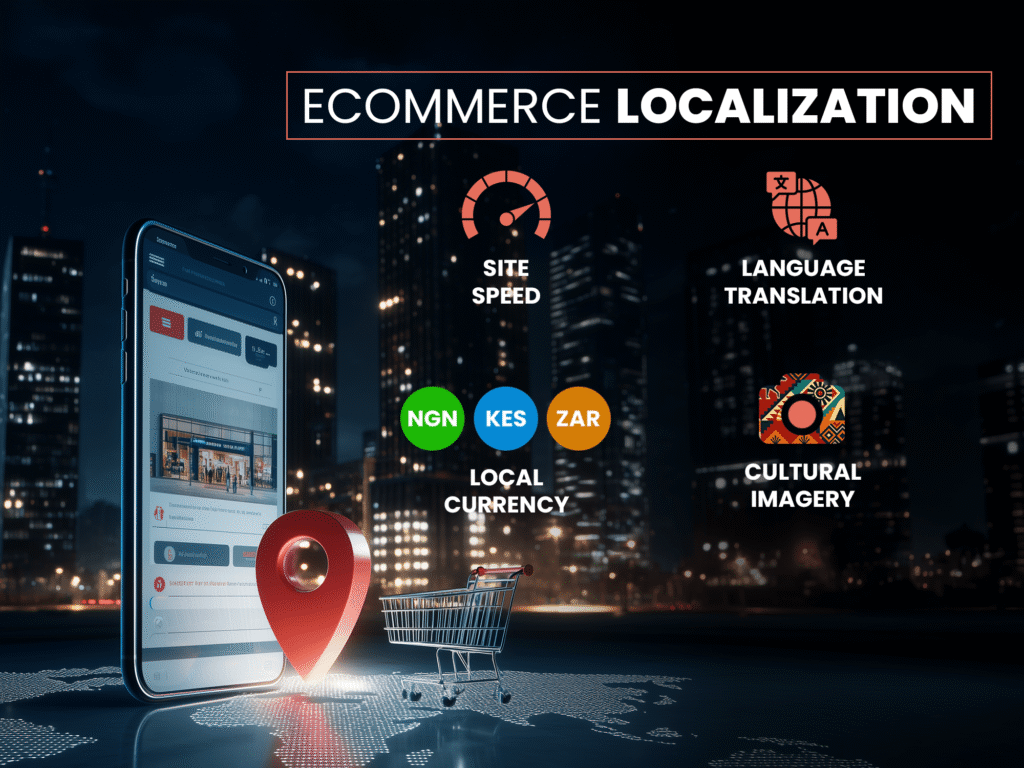
- Language that Resonates: While English, French, and Portuguese are official languages in many countries, using local languages like Swahili, Hausa, Zulu, or Amharic in key areas of your site (greetings, product descriptions, customer support) builds immense trust. It signals that your brand respects and understands the local culture. This is why you need professional language services for ecommerce. By investing in specialized holiday translation services, you will make sure that your messaging is not just correct but culturally compelling.
- Show the Local Currency: Displaying prices in US Dollars or Euros creates friction and cognitive load for the shopper. Integrating local currencies like the Nigerian Naira (NGN), Kenyan Shilling (KES), and South African Rand (ZAR) is a must!
- Imagery Matters: Stock photos of Western families celebrating Christmas will not resonate in Lagos or Nairobi. Use high-quality, culturally relevant imagery that reflects the local population, traditions, and environment.
SEO for Africa’s Holiday Season:
Your SEO strategy should also be localized; this means conducting keyword research for local search terms. For example, a shopper in Kenya is more likely to search for “zawadi za krismasi” than “Christmas gifts.”
Also, given that many users operate in low-bandwidth environments, optimizing your site for speed by compressing images and minimizing code is crucial for ranking and user experience.
Crafting Your Pan-African Holiday Marketing Campaign
The holiday season, especially Black Friday, is a make-or-break event in the African market. According to the Ecentric 2024 Black Friday Index, in South Africa, sales from Black Friday weekend surged 30.4%, making up 10.3% of the entire holiday period’s transactions.
To see such increases in your sales numbers, your eCommerce holiday marketing strategy needs to stand out by being culturally intelligent and to embrace a multi-channel approach that blends digital ads with the platforms where African consumers spend their time.
Here are three powerful ecommerce holiday season ideas to build your strategy around:
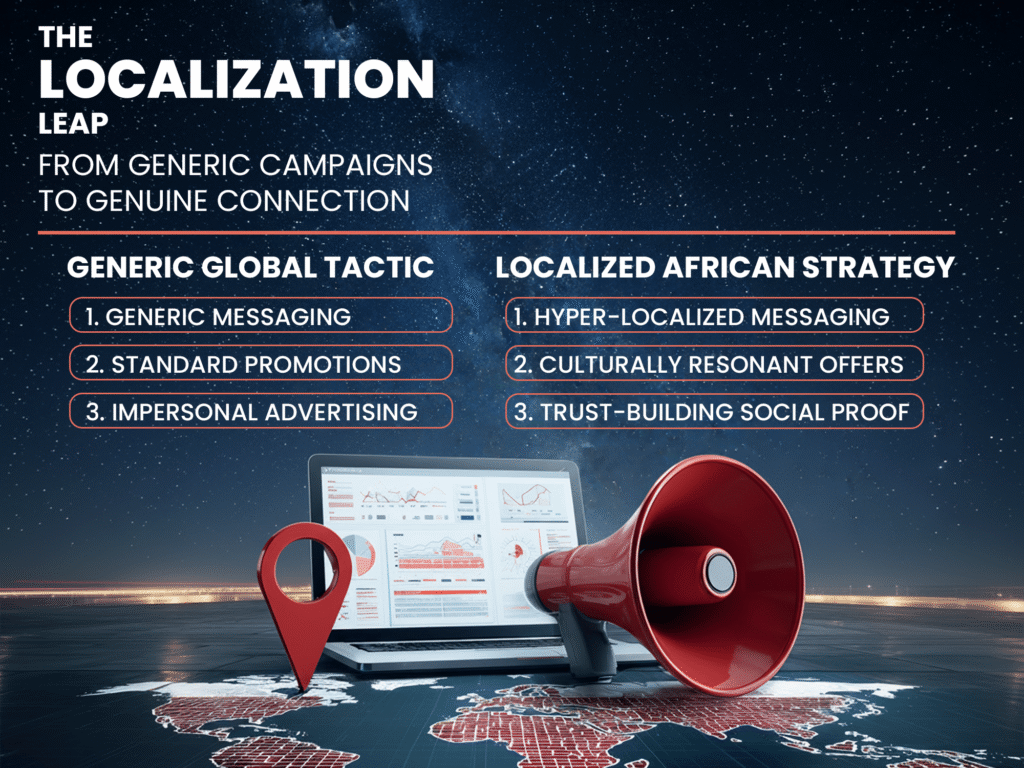
1. Hyper-Localize Your Channels and Messaging
Go where your customers are and speak their language—literally and figuratively. A generic ad eCommerce holiday season campaign will be ignored; a localized one will connect.
- In Kenya and Nigeria, don’t just rely on email. Run WhatsApp-exclusive flash sales using the “Status” feature or create VIP broadcast lists. This leverages the platform’s popularity for commerce, making customers feel like insiders.
- When advertising in Nigeria, instead of a generic “Holiday Sale,” run a campaign titled “Our Yakata Don Land!” (Our big sale has arrived!). This uses local pidgin to create an instant, authentic connection that builds brand affinity.
2. Craft Culturally Resonant Offers and Promotions
The most effective promotions are not just about the discount; they are about the context. Align your offers with local values, events, and economic realities.
- In Kenya, create a specific “Jamhuri Day Freedom Sale” on December 12th with patriotic-themed creative. This shows you are aware of and celebrating important local dates, not just international ones.
- Instead of a simple “Buy One, Get One” deal, frame it as a “Family & Friends Bundle” in markets like South Africa, where communal holiday gatherings are central. This aligns the promotion with the customer’s mindset of sharing and generosity.
3. Build Trust Through Local Partnerships and Social Proof
In the African market, where trust is paramount, leveraging local voices and validating your brand through customer experiences is critical for driving conversions during the eCommerce holiday season.
- Instead of a major celebrity, partner with a trusted local micro-influencer in Lagos who is known for their expertise in your niche (e.g., a tech reviewer or a fashion blogger). Their authentic endorsement to a dedicated audience is often more powerful than a generic ad.
- Launch a user-generated content (UGC) campaign in Egypt with the hashtag #WhiteFridayFinds, encouraging customers to share photos of their purchases. By featuring the best posts on your social media, you provide powerful, relatable social proof to potential buyers who are still on the fence.
Logistics & Customer Experience: The Critical Factors
A brilliant marketing campaign for the eCommerce holiday season means nothing if the delivery and service fail. Logistics in Africa can be complex, and customer expectations for support are quite high.
Navigating Logistics and Shipping:
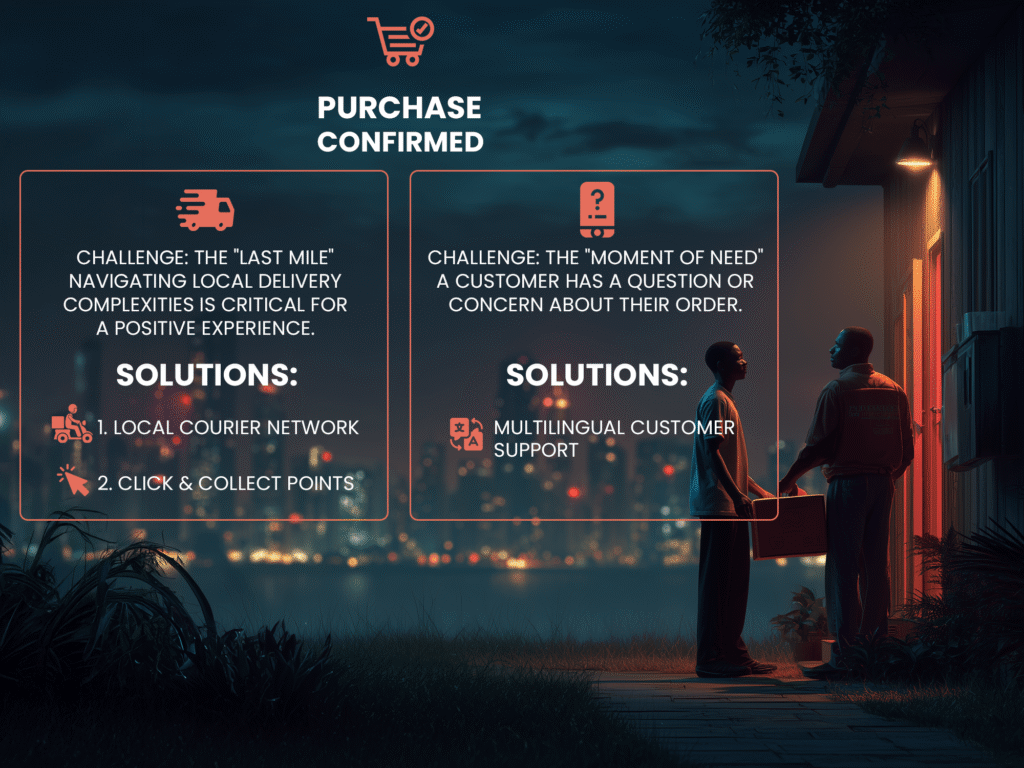
The “last mile” is everything; that’s why you need to partner with a network of reliable, local courier services. Be transparent and even over-communicate about shipping times and costs to manage expectations.
The rise of “Click and Collect” points in major urban centers is a powerful trend too, offering customers a secure and convenient way to receive their orders. An eCommerce holiday season plan must include robust testing of your entire logistics chain, from inventory management to final delivery confirmation.
Providing Multilingual Customer Support:
During the high-stress eCommerce holiday season, providing customer support in a shopper’s native language is a powerful tool to stand out. It can turn a potentially negative experience (a late delivery, a product question) into a moment of trust and loyalty.
Clear, empathetic communication in the language your customer is most comfortable with is not a luxury; it’s a core component of a successful holiday ecommerce strategy. Investing in professional language services for ecommerce, especially during this peak time, is an investment in customer retention.
Post-Holiday: Turning Seasonal Shoppers into Loyal Customers
The end of the holiday season isn’t the end of the journey. The influx of new customers is a perfect opportunity to build a year-round relationship. Instead of the generic “New Year, New You” campaigns, focus on localized re-engagement:
- New Year Offers: Tailor your campaigns to local aspirations and resolutions.
- Targeted Communication: Send follow-up emails and SMS messages in the local language, referencing their holiday purchase.
- Loyalty Programs: Design loyalty programs that are simple and mobile-friendly, offering rewards that are valuable in the local context.
Conclusion
A successful eCommerce holiday season is not just about sales figures; it’s about building a brand that resonates, understands, and respects the local consumer. From language and currency to payment methods and cultural nuances, deep localization is the single most important driver of success.
Ready to unlock Africa’s eCommerce potential? Don’t let language be a barrier. Partner with Afrolingo for expert translation and localization services that connect with your customers. Contact us today to prepare for a record-breaking holiday season.
FAQs
What is the holiday shopping season?
The holiday shopping season is the period of peak retail activity, typically starting in October and running through early January. Globally, it includes major sale days like Black Friday and Cyber Monday, but in regions like Africa, it also encompasses local holidays and unique sale events like White Friday and Yakata Sales.
How long is the holiday season?
While traditionally centered around November and December, consumer behavior is shifting. Many shoppers now start their holiday purchasing as early as September to spread out costs and find the best deals, effectively extending the season to a full quarter.
What are the biggest sales days of the year?
Globally, Black Friday (the Friday after US Thanksgiving) and Cyber Monday are the biggest online shopping days. In 2025, Black Friday falls on November 28th and Cyber Monday on December 1st. However, in many African countries, local events like Jumia’s month-long Black Friday campaign or region-specific sales can be just as significant.
What are the slowest months for online sales?
Typically, the slowest months for eCommerce are January and February. This is due to a post-holiday spending slump as consumers recover from holiday expenses and focus on New Year’s resolutions, which often include saving money.